How to improve your restaurant delivery setup in Greece

A strong delivery setup helps your restaurant reach customers beyond the dining room while keeping the food and experience true to your brand. Whether your restaurant is in Athens, Thessaloniki or another Greek city, the essentials are the same: a menu that travels well, thoughtful packaging and a kitchen flow your team can rely on.
The good news is that you do not need to redesign your whole operation at once. Start with the dishes, packaging and handover steps that have the biggest effect on quality. Once your venue is live on Wolt, use the Merchant Portal to learn from each order and keep improving.
How should you structure your menu for delivery?
Some dishes travel beautifully as they are, while others need a small adjustment to arrive at their best. Start by reviewing each item from the customer's point of view: how will it look, taste and feel after the journey from your kitchen to their door?
Start with dishes that travel confidently: Souvlaki wraps, pita-based dishes, salads with dressing on the side and desserts such as portokalopita can all be good candidates. Fried items may benefit from vented packaging, while dishes with delicate sauces or precise plating may need a thoughtful delivery-friendly adjustment.
Create useful bundles: A family meal, weekday lunch combo or first-order sampler can make choosing easier for customers while keeping preparation straightforward for your team. Existing Wolt partners can create and manage their menu in the Merchant Portal.
Aim for a clear, complete menu: Give customers a good view of what you offer, with dishes grouped into simple categories and descriptions that set expectations. If an item needs a delivery-friendly adjustment, update the description, portion or packaging rather than removing it automatically. See our menu design essentials and restaurant menu examples for more ideas.
What packaging decisions affect food quality most?
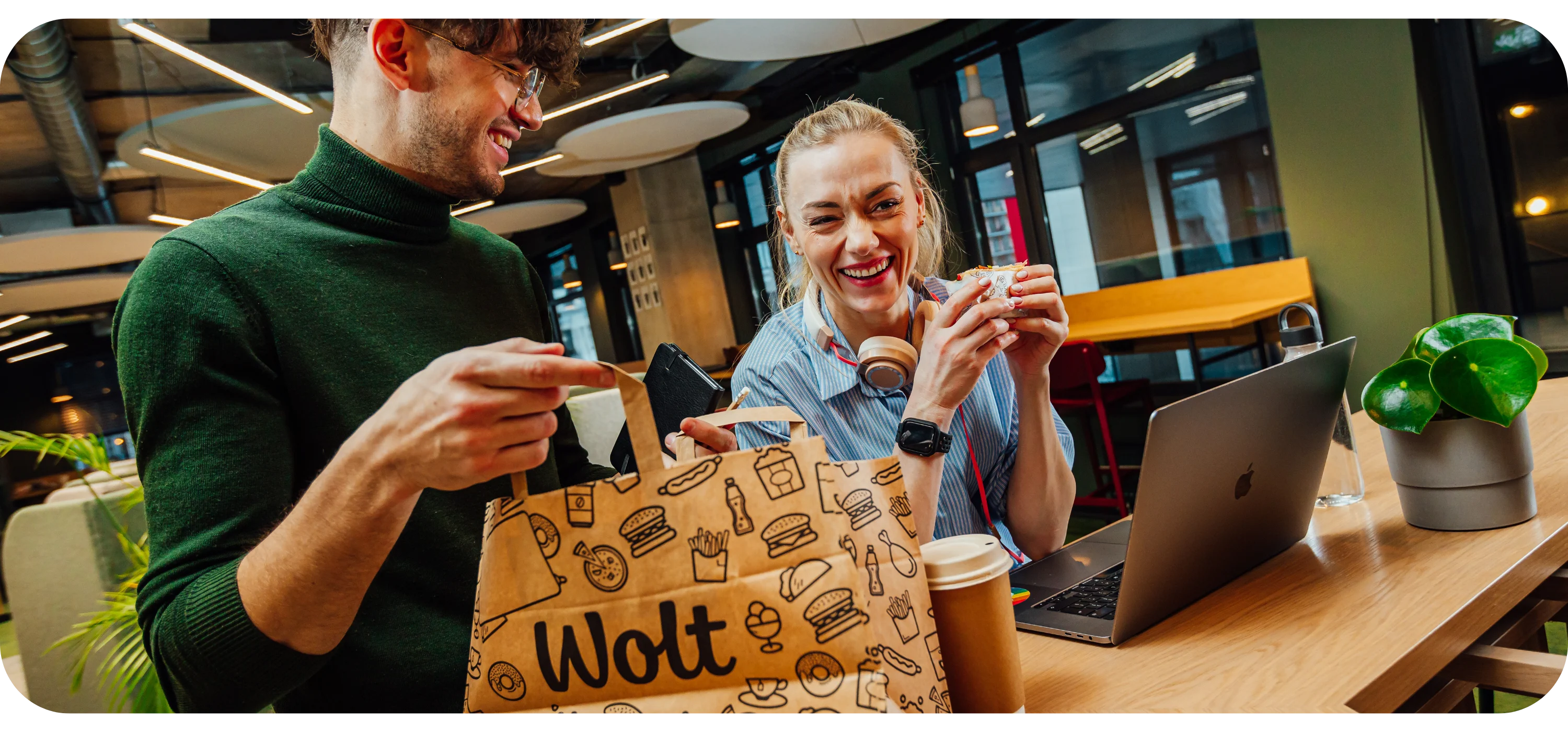
Thoughtful packaging protects the care your kitchen puts into every order. The right container helps each dish arrive closer to the way you intended, from crisp fried items to comforting moussaka.
Match the container to the dish: Use insulated packaging for hot items, leak-proof seals for dishes with sauces, and separate compartments for salads and dressings.
Give steam somewhere to go: Crispy items such as fried calamari or spanakopita can lose their texture in an airtight container. Vented lids or perforated packaging help steam escape while keeping the food protected.
Make the unboxing feel considered: A clean label, a napkin and the right cutlery take only a moment to add, but they help every order feel complete and cared for.
How do you manage kitchen flow during peak delivery hours?
A smooth delivery flow lets dine-in and delivery orders work side by side. A few clear roles and handover steps can help your team stay calm and consistent when both channels get busy.
Set realistic preparation times: Accurate estimates help customers, couriers and your kitchen stay in sync. Review your actual preparation times, adjust them to match the current workload, and mark orders ready when they are fully packed. The reduce late orders guide walks through the process.
Create a dedicated prep space if volume allows: Even a small counter for assembling delivery orders can make service feel more organised. Keeping packaging, labels and containers together also makes the handover easier for your team.
Use availability as a control: You decide when your venue is online for delivery. If the kitchen needs breathing room during a busy service, you can temporarily go offline or adjust your opening hours, then reopen when the team is ready. The venue availability guide explains the available controls.
What role does order accuracy play in delivery success?

Order accuracy is one of the clearest ways to build customer trust. A complete, carefully checked bag helps the meal arrive as expected and gives customers another reason to choose you again.
Make the order flow easy for everyone: Every staff member involved in delivery should know how to read incoming orders, check modifications and confirm item counts. The train your team guide covers the essentials.
Check before you seal: A quick visual check of every bag before handoff can catch missing or incorrect items. It takes only a moment and helps prevent avoidable refunds and disappointment.
How do you track whether your delivery setup is actually working?
Your delivery setup will get stronger as you learn what works best for your menu and team. A regular look at your numbers and customer feedback can help you decide where one small change will have the most value.
Use the data that matters: Analytics & Insights in the Merchant Portal shows sales, average basket size, popular items, new and returning customers, plus operational measures such as preparation time, order accuracy and downtime. A weekly check can help you spot patterns while they are still easy to act on.
Listen to customer feedback: Ratings and reviews add useful context to the numbers, including how customers experienced item quality, accuracy and condition on arrival. The improve your venue rating guide offers practical ways to turn recurring feedback into better processes.
Keep learning through small tests: Try a new packaging approach for one item, introduce a bundle and review the results, or fine-tune preparation times after a busy weekend. Small, regular improvements are easier for the team to manage and can make a meaningful difference over time.